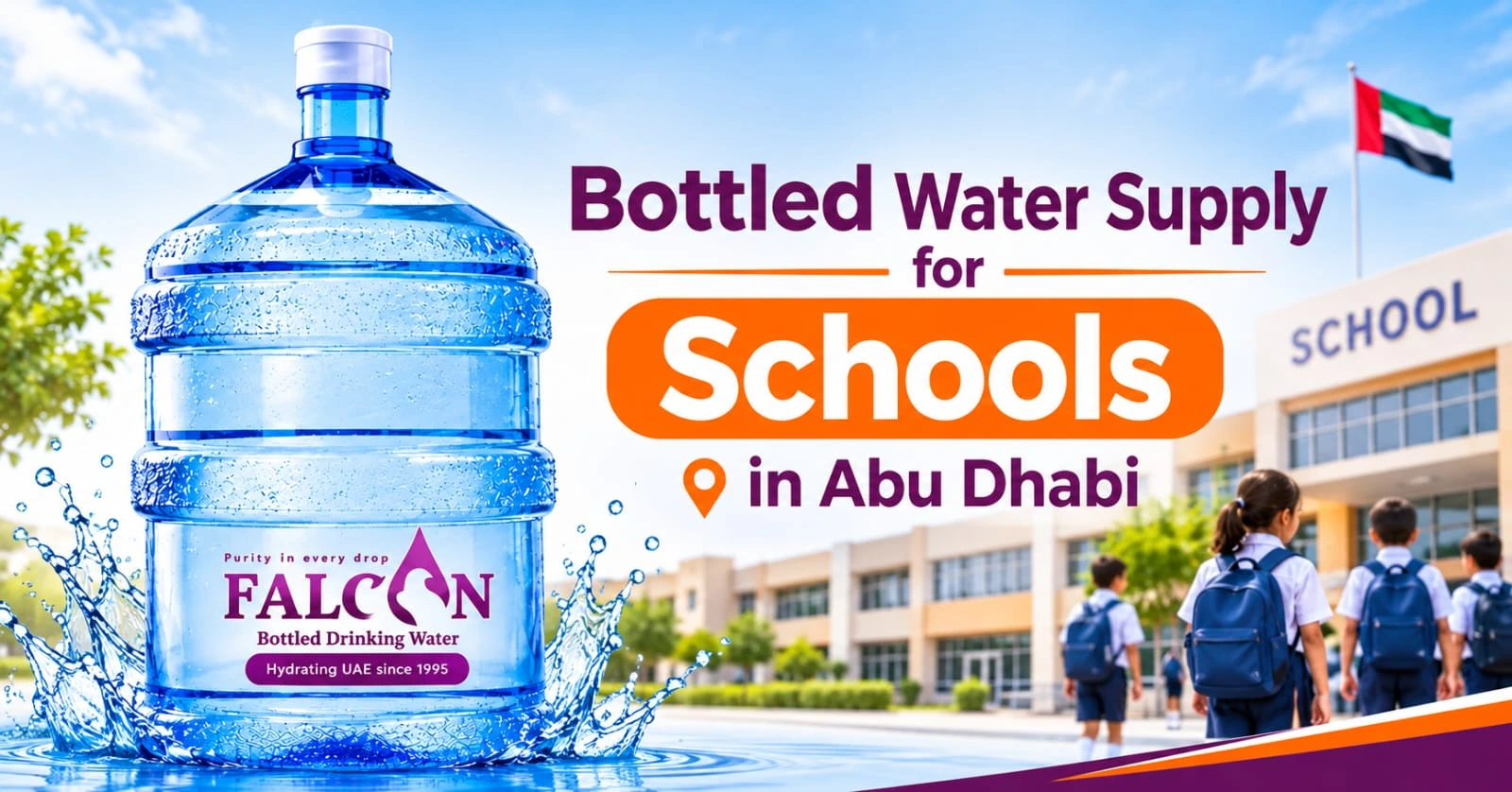
Bottled Water Supply for Schools in Abu Dhabi: Bulk Orders & Delivery Planning
Managing a bottled drinking water supply for schools in Abu Dhabi requires careful planning around student numbers, staff requirements, school schedules, storage facilities and daily consumption. Educational institutions need accessible drinking water throughout the school day, including classrooms, canteens, sports areas and outdoor activities. Arranging a suitable commercial bottled water supply service can help schools coordinate bulk orders, plan recurring deliveries and manage different bottle formats according to their requirements.
A school with hundreds or thousands of students may have several water distribution points, different age groups, multiple buildings and separate staff facilities. Demand can also change during examinations, sports days, school trips, events and seasonal programmes.
Instead of placing orders only when stock becomes low, schools can benefit from a structured supply plan based on actual consumption, delivery schedules and available storage.
This guide explains how school administrators, procurement teams, facility managers and educational institutions in Abu Dhabi can plan bottled water orders and manage their drinking water requirements more efficiently.
Quick Answer: How Should Schools Plan Bulk Bottled Water Supply?
A practical school water supply plan should cover these areas:
-
Student numbers: Estimate requirements using attendance and school population.
-
Staff requirements: Include teachers, administrative teams, support staff and visitors.
-
Bottle selection: Choose suitable sizes for classrooms, meetings, sports activities and school events.
-
Daily consumption: Review actual usage rather than relying on assumptions.
-
Bulk ordering: Calculate quantities based on consumption, stock and delivery frequency.
-
Storage: Maintain clean, suitable and protected storage areas.
-
Delivery scheduling: Arrange deliveries around school operating hours and holidays.
-
Stock monitoring: Track incoming bottles, distribution and remaining inventory.
-
Supplier coordination: Confirm quantities, delivery locations and receiving arrangements.
The objective is to maintain access to drinking water throughout the school day while avoiding unnecessary overstocking and emergency orders.
Why Is Reliable Drinking Water Supply Important for Schools?
Schools are busy environments where students, teachers and other staff use shared facilities throughout the day.
Drinking water needs to be available in appropriate locations, including classrooms, dining areas, canteens, sports facilities and activity spaces.
Abu Dhabi’s 2025 Unified School Nutrition and Food Safety Guideline specifically states that schools must ensure free, safe and potable drinking water is always accessible to students. It also identifies classrooms, dining areas, canteens and sports zones as important locations for water access.
1. Student Access During School Hours
Students need practical access to drinking water throughout the school day.
A supply plan should consider where water is available and how students can access it during lessons, breaks and meal times.
2. Different School Areas
A school may have several buildings, floors, classrooms, laboratories, sports facilities and administrative areas.
The water requirement for each location may be different.
3. Staff and Visitor Requirements
Teachers, administrative employees, maintenance teams, parents and visitors may also use school drinking water facilities.
Their requirements should be included in the overall procurement plan.
4. Sports and Outdoor Activities
Physical education, school competitions, outdoor programmes and special events may increase water demand at particular times.
Schools should plan additional supplies according to their activity calendar.
5. School Events and Special Programmes
Sports days, cultural programmes, parent meetings, examinations and extracurricular activities can create temporary increases in consumption.
Advance planning helps avoid shortages during these occasions.
Understanding Abu Dhabi’s School Drinking Water Guidelines
When planning bottled water supply, schools should consider the local requirements that apply to educational institutions.
The Abu Dhabi Guideline for Unified School Nutrition and Food Safety, ADG 2/2025, includes specific hydration and beverage requirements.
Its drinking-water section identifies the following expectations:
-
Free, safe and potable drinking water should always be accessible to students.
-
Water stations should be installed and maintained in classrooms.
-
Dining areas and canteens should have access to water.
-
Sports and physical activity zones should have drinking-water access.
-
Water should be available with meals and during school-based activities, including outdoor events and physical education classes.
The guideline also identifies plain drinking water as the primary hydration source in schools.
This is an important consideration for school procurement teams.
Bulk bottled water delivery can support a school’s drinking-water arrangements, but it should not automatically be treated as a replacement for the water stations and access arrangements required by the school’s applicable policies.
Schools should follow the relevant requirements and coordinate bottled water orders with their wider facility and health-and-safety arrangements.
How to Calculate Bottled Water Requirements for a School
One of the first steps in organising bulk water delivery is estimating how much water the institution uses.
A school with 300 students will have different requirements from an institution with 1,500 students and multiple campuses.
However, student numbers alone are not enough to calculate an accurate order.
Step 1: Confirm the Student Population
Record the number of students enrolled and consider average daily attendance.
For example, a school may have 1,200 enrolled students but a different number physically present each day.
Using actual attendance patterns can help improve purchasing estimates.
Step 2: Include Teachers and School Staff
Estimate the requirements for:
-
Teachers.
-
Administrative employees.
-
Maintenance staff.
-
Security personnel.
-
Canteen employees.
-
Transport and support teams.
-
Visitors and parents.
Keep staff consumption separate from student requirements where possible.
Step 3: Review Existing Drinking Water Facilities
Identify the water sources already available within the school.
For example:
-
Drinking-water stations.
-
Water dispensers.
-
Bottled water distribution points.
-
Canteen facilities.
-
Staff pantry areas.
The purpose is to understand where additional bottled water is needed rather than ordering the same quantity for every location.
Step 4: Estimate Daily Consumption
Review historical stock records and actual bottle usage.
The school’s consumption estimate should account for its water-distribution policy, available drinking-water facilities and the requirements of different school activities.
Step 5: Consider Special Activities
Additional quantities may be needed for:
-
Sports days.
-
School trips.
-
Outdoor activities.
-
Parent meetings.
-
Cultural programmes.
-
Competitions.
-
Summer classes.
-
School celebrations.
Keep these requirements separate from regular classroom and staff consumption.
Step 6: Maintain a Suitable Reserve
Schools should maintain sufficient stock to account for changes in attendance, delayed deliveries and unexpected activities.
The reserve quantity depends on available storage, supplier lead time and the institution’s operational requirements.
Example: Weekly School Water Order Calculation
Imagine a school estimates that it uses 700 bottles per school day for its planned bottled-water distribution.
The school operates five days each week.
Its estimated weekly requirement would be:
Now consider its inventory:
| Planning Item | Quantity |
|---|---|
| Estimated weekly consumption | 3,500 bottles |
| Planned reserve | 400 bottles |
| Available usable stock | 600 bottles |
| Suggested order quantity | 3,300 bottles |
Calculation:
3,500 + 400 − 600 = 3,300 bottles
These figures are illustrative procurement assumptions, not recommended daily drinking-water allowances for children.
Actual quantities should be based on the school’s consumption records, water-access arrangements and operational requirements.
Which Bottled Water Sizes Are Suitable for Schools?
Different school areas may require different bottle formats.
Choosing the right size can make storage, distribution and stock management easier.
1. Small Bottles for Students
Individual bottled water can be convenient for selected school activities, trips, meetings and situations where individual distribution is required.
Smaller bottle formats, such as 500 ml, may be practical for individual use depending on school policy and age group.
Consider:
-
Ease of handling.
-
Quantity required.
-
Storage space.
-
Distribution arrangements.
-
Packaging waste.
-
School purchasing requirements.Bottled Water Supply for Schools in Abu Dhabi: Bulk Orders
The most suitable format should be decided according to the school’s distribution policy.
2. Bottles for School Events and Outdoor Activities
Schools may need additional individual bottles for:
-
Sports competitions.
-
School trips.
-
Outdoor programmes.
-
Cultural events.
-
Parent gatherings.
-
Educational activities.
Estimating event attendance separately can prevent the regular school supply from being used up unexpectedly.
3. Large Bottles for Staff Rooms and Administrative Areas
Large-format water bottles, such as 5-gallon (approximately 19-litre) bottles, may be useful in suitable office pantries, teacher rooms and staff facilities equipped with compatible dispensers.
This format can support shared facilities where a larger supply is needed.
Before choosing it, check:
-
Dispenser compatibility.
-
Available storage space.
-
Bottle handling arrangements.
-
Empty-bottle collection.
-
Cleaning and maintenance responsibilities.
4. Bottled Water for Meetings and Visitors
Schools frequently arrange meetings involving parents, visitors, inspectors and external representatives.
Individual bottles can be convenient for these situations, depending on the institution’s serving arrangements.
Falcon provides different bottled water formats for residential and commercial customers, including 500 ml, 1.5-litre and 5-gallon options. Check current availability and discuss the most suitable sizes for your institution before placing a bulk order.
How to Organise Drinking Water Distribution Across a School
Placing all bottled water in a single storage room may not be practical for larger educational institutions.
Students and staff need convenient access to water in the areas where they spend time.
A school distribution plan should identify the main locations and the person responsible for monitoring stock.
1. Identify Water Access Points
Prepare a simple school layout showing where drinking water is available.
Possible locations include:
-
Classroom areas.
-
Dining halls.
-
Canteens.
-
Sports facilities.
-
Staff rooms.
-
Administrative offices.
-
Meeting rooms.
-
School activity spaces.
The distribution arrangement should support the school’s wider drinking-water access requirements.
2. Assign Department Responsibilities
Identify which employee or department is responsible for checking stock.
For example:
-
Facility management can monitor dispensers and storage.
-
Canteen teams can track drinking-water requirements in dining areas.
-
Administrative staff can manage office supplies.
-
Event coordinators can estimate additional quantities for activities.
Clear responsibilities make it easier to identify and resolve shortages.
3. Monitor Stock by Location
Maintain simple records showing:
-
Bottles received.
-
Bottles distributed.
-
Remaining inventory.
-
Replenishment date.
-
Responsible department.
This helps procurement teams understand which locations use the most bottled water.
4. Review Distribution During the School Year
Water requirements can change when schools introduce new activities, open additional classrooms or adjust their timetable.
Update the distribution plan whenever the institution’s operating arrangements change.
How to Plan Bulk Bottled Water Deliveries Around School Schedules
School delivery planning requires attention to operating hours, security arrangements and receiving procedures.
A delivery that arrives during student arrival, dismissal or a busy break period may create unnecessary disruption.
1. Confirm School Delivery Hours
Identify the time slots when suppliers can enter the premises and unload stock.
Consider:
-
School opening and closing times.
-
Student arrival and dismissal.
-
Canteen operating hours.
-
Security access procedures.
-
Loading and unloading arrangements.
-
Staff availability.
2. Choose a Suitable Delivery Frequency
Delivery frequency should reflect consumption, storage capacity and supplier lead time.
Some schools may prefer weekly deliveries, while larger institutions may need more frequent replenishment.
The schedule should be agreed with the supplier according to actual demand.
3. Coordinate Deliveries With the School Calendar
Schools do not operate with the same demand throughout the year.
Important dates include:
-
Term opening.
-
Examination periods.
-
School holidays.
-
Sports events.
-
Parent meetings.
-
Summer programmes.
-
Special celebrations.
Adjusting delivery quantities to the academic calendar can help reduce unused stock during holidays and prevent shortages when activities resume.
4. Confirm the Delivery Location
Large schools may have multiple buildings or separate receiving areas.
Provide the supplier with the correct entrance, delivery location, receiving contact and any relevant security instructions.
5. Establish a Reorder Point
A reorder point identifies when the school should place its next order.
A simple formula is:
Reorder point = Expected consumption during supplier lead time + Reserve stock
For example, a school using 500 bottles per school day with a two-day replenishment period would need to consider 1,000 bottles for that lead-time period, before adding an appropriate reserve.
The final reorder point should account for actual delivery days and the school’s operating calendar.
How Should Schools Store Bottled Water?
Proper storage helps maintain orderly inventory management and protects the packaging before distribution.
Schools should designate suitable storage areas for bottled water and follow the supplier’s product-storage instructions.
Choose a Clean Storage Area
Store bottled water away from cleaning chemicals, waste, fuel and other potential contaminants.
Protect Products From Direct Sunlight
Avoid prolonged exposure to direct sunlight and excessive heat.
Select an appropriate indoor storage location and follow the supplier’s guidance.
Keep Bottles Organised
Arrange different product sizes separately and use labels to identify quantities and delivery dates.
Rotate Stock
Use a first-in, first-out approach where appropriate, while checking product dates and storage instructions.
Inspect Incoming Deliveries
When a delivery arrives, check:
-
Correct bottle size.
-
Product quantity.
-
Packaging condition.
-
Bottle seals.
-
Visible damage.
-
Delivery records.
Products with damaged packaging or compromised seals should not be distributed.
Maintain Dispenser Hygiene
Where large-format bottles are used, include dispenser cleaning and maintenance in the school’s facility-management procedures.
How to Manage Water Supply for School Events and Sports Activities
Regular classroom consumption and event requirements should not be treated as one fixed quantity.
Sports days, outdoor programmes, competitions and educational trips can create temporary increases in water demand.
A separate event supply plan helps schools avoid unexpected shortages.
Sports Days
Estimate the number of participating students, staff members and visitors.
Identify the water distribution points needed at sports areas and coordinate supplies with the event timetable.
School Trips
Prepare quantities according to the number of participants, trip duration and travel arrangements.
Confirm who is responsible for carrying and distributing the water.
Parent Meetings and School Events
Review expected attendance and consider whether individual bottles are required for visitors, staff or participants.
Outdoor Activities
Plan water access according to the activity location and the school’s health-and-safety arrangements.
The school should also ensure that event teams understand where water is stored and how additional stock can be requested.
How Does UAE Weather Affect School Water Supply Planning?
Abu Dhabi’s climate makes seasonal planning relevant for schools, especially when outdoor activities take place.
However, school water supply planning should not rely on weather alone.
Consider:
-
Academic calendar.
-
Outdoor activity schedule.
-
Sports events.
-
School attendance.
-
Available water stations.
-
Student and staff requirements.
-
Storage conditions.
During periods of higher temperatures, schools should coordinate their drinking-water arrangements with their health, safety and activity procedures.
Abu Dhabi’s 2025 school guideline specifically identifies access to drinking water during meals, outdoor events and physical education activities.
Bottled water deliveries can support additional requirements, but schools should continue to maintain their designated water facilities and follow applicable school policies.
What Should Schools Check Before Choosing a Bottled Water Supplier?
Selecting a supplier involves more than comparing the price of individual bottles.
Schools should evaluate whether the supplier can meet their operational, procurement and delivery requirements.
Product Availability
Can the supplier provide the required bottle formats and quantities?
Bulk Supply Options
Does the supplier offer commercial bulk orders for educational institutions?
Delivery Coverage
Does the supplier serve the exact school location in Abu Dhabi?
Scheduled Deliveries
Can deliveries be arranged weekly, bi-weekly or according to the school’s requirements?
Product Information
Can the supplier explain the product type, packaging and applicable quality standards?
Storage and Bottle Collection
For large-format bottles, confirm the dispenser compatibility, handling and empty-bottle collection arrangements.
Commercial Terms
Review:
-
Bulk pricing.
-
Minimum order quantities.
-
Delivery charges.
-
VAT and invoicing.
-
Payment terms.
-
Bottle deposits or exchange arrangements, where applicable.
Communication and Order Support
A clear contact for ordering, delivery changes and additional requirements makes recurring supply easier to manage.
How Falcon Bottled Water Supports School Water Supply in Abu Dhabi
Schools need a supplier that can understand their requirements and coordinate appropriate quantities, product formats and delivery arrangements.
Falcon Bottled Water supplies educational institutions, including schools and universities, alongside offices, hospitality businesses and other commercial customers across the UAE.
Its commercial water supply service offers:
-
Bulk bottled water orders.
-
Different bottle formats.
-
Scheduled delivery arrangements.
-
Commercial supply options.
-
Delivery coverage across the UAE, including Abu Dhabi.
Falcon lists 500 ml, 1.5-litre and 5-gallon bottles among its available commercial water formats. Confirm current product availability and the most suitable arrangement for your school.
Home & Office Delivery – Falcon+2
For schools planning regular supply, the procurement team can discuss:
-
Student population.
-
Staff requirements.
-
Required bottle sizes.
-
Estimated weekly consumption.
-
Campus and receiving locations.
-
Preferred delivery frequency.
-
School calendar and event requirements.
Explore Falcon’s commercial bottled drinking water supply to discuss bulk orders and scheduled deliveries for your educational institution.
For Abu Dhabi-specific enquiries, Falcon also lists its Abu Dhabi contact details on its official contact page.
School Bottled Water Procurement Checklist
Before placing a bulk order, review the following.
School Requirements
Product Selection
Delivery Planning
Stock Management
Commercial Arrangements
Frequently Asked Questions
How can schools arrange bulk bottled water supply in Abu Dhabi?
Schools can estimate student and staff requirements, select suitable bottle formats, calculate weekly consumption and contact a commercial supplier to discuss bulk pricing and scheduled deliveries.
Which bottled water sizes are suitable for schools?
The appropriate size depends on how water is distributed. Smaller bottles may suit individual requirements and school events, while 5-gallon bottles may be useful for staff rooms and suitable facilities equipped with compatible dispensers.
How much bottled water does a school need per week?
There is no universal quantity for every school. The requirement depends on attendance, staff numbers, existing water facilities, school activities and actual consumption records.
Can schools arrange weekly bottled water delivery?
Yes. Schools can discuss recurring delivery arrangements with commercial suppliers. The frequency should reflect consumption, storage capacity and the academic calendar.
Does Abu Dhabi require schools to provide drinking water?
Abu Dhabi’s 2025 Unified School Nutrition and Food Safety Guideline states that free, safe, potable drinking water must always be accessible to students. It also identifies classrooms, dining areas, canteens and sports zones as important water-access locations. Schools should follow the applicable regulatory and institutional requirements.
Can bottled water replace school drinking-water stations?
Not automatically. Bottled water may support school distribution and event requirements, but schools should maintain the drinking-water access arrangements required by applicable guidelines and policies.
Can schools order 5-gallon bottled water?
Yes, where the supplier offers the required format. Large bottles may be suitable for staff rooms, offices and other facilities with compatible dispensers.
How should bottled water be stored in schools?
Keep bottles in a clean, protected storage area away from direct sunlight, excessive heat and potential contaminants. Check packaging and seals, follow storage instructions and rotate stock appropriately.
Can one supplier serve multiple school campuses?
This depends on the supplier’s delivery coverage and commercial arrangements. Schools should provide each campus address, estimated quantities and preferred delivery windows when requesting a quotation.
What should a school ask before selecting a water supplier?
Check product availability, water specifications, bulk pricing, delivery coverage, minimum quantities, recurring schedules, bottle formats and invoicing arrangements.