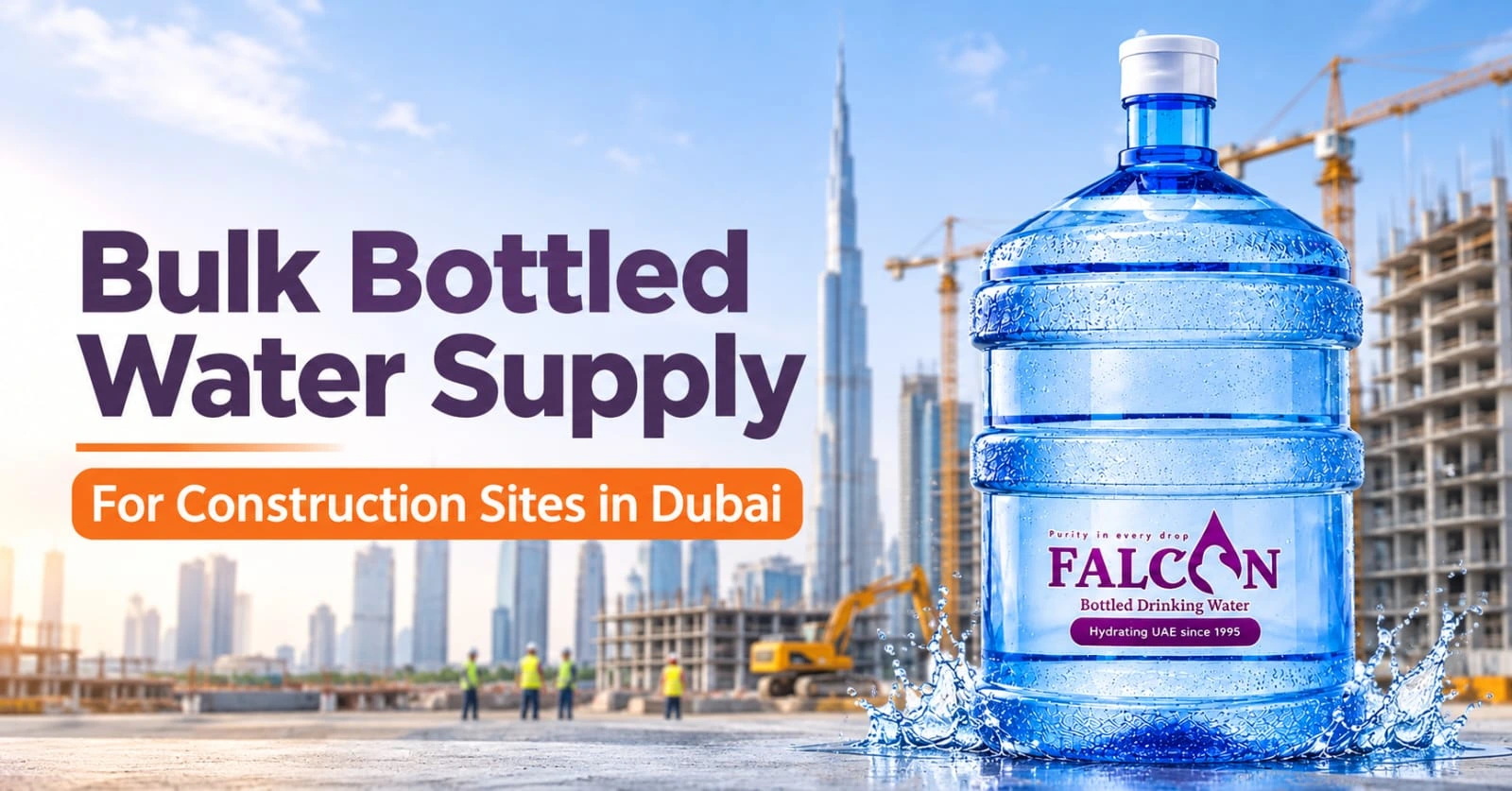
Bulk Bottled Water Supply for Construction Sites in Dubai: Delivery Planning for Site Teams
Managing a bulk bottled drinking water supply for construction sites in Dubai requires more than ordering a large quantity of bottles. Construction projects often involve multiple work areas, changing worker numbers, different shifts, subcontractors and site access restrictions. Without a proper delivery and distribution plan, drinking water can run short in busy areas while excess stock occupies valuable storage space elsewhere. Choosing a suitable commercial bottled water supply service can help contractors coordinate bulk orders, recurring deliveries and different bottle formats according to their site requirements.
From site offices and worker rest areas to security cabins, workshops and active construction zones, each location may have different water requirements. A large project may also experience changes in demand as additional workers join, construction phases progress or working schedules change.
The most effective approach is to plan water supply around worker numbers, daily consumption, site layout, storage capacity and delivery schedules rather than relying on last-minute orders.
This guide explains how construction companies, contractors, site managers and procurement teams in Dubai can organise bottled water supply more efficiently.
Quick Answer: How Should Construction Sites Plan Bottled Water Supply?
A practical construction-site water supply plan should cover:
-
Worker numbers: Estimate demand using the number of workers present during each shift.
-
Site distribution: Identify where drinking water needs to be available.
-
Bottle formats: Select suitable sizes for individual workers and shared site facilities.
-
Bulk quantities: Calculate orders using actual consumption and current stock.
-
Delivery schedule: Arrange deliveries around site access and operating hours.
-
Storage: Keep bottled water in a suitable, clean and protected area.
-
Stock monitoring: Track deliveries, daily usage and remaining inventory.
-
Supplier coordination: Confirm delivery locations, quantities and expected arrival times.
A planned supply arrangement makes it easier for site teams to maintain availability without over-ordering or depending on emergency replenishment.
Why Is Drinking Water Supply Important at Construction Sites?
Construction sites operate differently from offices, hotels and retail establishments. Workers may be spread across several work zones, and access to facilities can change as the project develops.
Providing accessible drinking water should therefore be part of the site’s daily operational and health-and-safety planning.
The UAE Government’s workplace guidance requires employers to provide a safe and appropriate working environment and follow applicable occupational health and safety procedures.
1. Access Across Different Work Areas
Workers may be located at ground level, upper floors, outdoor work areas, workshops or temporary facilities.
Water should be available at practical locations rather than only at one central office.
2. Changing Workforce Numbers
The number of workers on a project may increase or decrease according to construction stages, contractor requirements and project schedules.
Water ordering should reflect the actual workforce rather than a fixed estimate made at the beginning of the project.
3. Multiple Working Shifts
Some projects operate across different shifts. A water supply plan should consider the needs of each shift and avoid situations where one team uses most of the available stock.
4. Site and Labour Accommodation Requirements
Projects with worker accommodation may need to manage drinking water separately for the construction site and residential facilities.
Keep the requirements for these locations in separate inventory records when they have different delivery points or consumption patterns.
5. Summer Operating Conditions
Heat management is particularly important for outdoor construction work in the UAE. Drinking water availability should be included in the site’s broader heat-stress prevention arrangements, alongside appropriate rest areas, cooling facilities and other required measures.
How to Calculate Bottled Water Requirements for Construction Workers
One of the first steps in arranging bulk bottled water delivery is estimating how much water the site needs.
Ordering without a consumption estimate can create two problems: running out of stock or keeping more bottles than the available storage space can accommodate.
A simple planning method starts with the number of workers present each day.
Step 1: Confirm the Daily Workforce
Record the number of people working at the site, including relevant contractors and subcontractors.
For example:
-
Main contractor workforce.
-
Electrical and plumbing teams.
-
Civil construction workers.
-
Finishing and installation teams.
-
Security personnel.
-
Site supervisors.
-
Delivery and maintenance personnel.
Include workers who may use the site’s drinking water facilities even when they are not part of the main contractor’s direct workforce.
Step 2: Divide Workers by Shift
If a project operates multiple shifts, calculate the requirement for each shift.
For example, the daytime and night-time teams may use separate facilities and have different consumption patterns.
This helps site managers distribute stock according to actual operating requirements.
Step 3: Review Daily Water Consumption
Use previous stock records to estimate how much bottled water the workforce uses.
Avoid applying the same estimate to every construction project. Consumption may vary depending on the work, duration, environmental conditions, availability of other approved drinking water sources and site arrangements.
Step 4: Include Visitors and Temporary Workers
Site inspections, contractor meetings and temporary project teams may increase demand.
Include these users when preparing the order forecast.
Step 5: Maintain an Appropriate Reserve
Keep additional stock based on supplier lead time, available storage space and the consequences of a delayed delivery.
The reserve should be determined from the site’s operating requirements rather than an arbitrary quantity.
Example: Weekly Construction-Site Water Planning
Consider a construction project with an average of 120 workers on site.
The procurement team records actual daily bottled-water consumption over several working days and establishes an average of 240 bottles per day for its chosen bottle format.
For a six-day working week:
The estimated weekly requirement is therefore 1,440 bottles, before accounting for existing stock, planned workforce changes or a suitable reserve.
This is an illustrative example, not a recommended daily drinking-water allowance. Actual requirements should be determined through site consumption records and the project’s health-and-safety arrangements.
Which Bottled Water Sizes Are Suitable for Construction Sites?
Different parts of a construction project may need different bottle formats.
Choosing the right size can make distribution, storage and inventory control easier.
1. Individual Bottles for Site Teams
Smaller bottles can be convenient for individual distribution to workers, supervisors, site visitors and contractors.
For example, 500 ml bottles may suit site distribution points where individual containers are preferred.
The advantages include:
-
Easy handling.
-
Convenient distribution.
-
Clear stock counting.
-
Less dependence on shared drinking containers.
-
Practical use at temporary work locations.
The required quantity should be based on the site’s actual distribution arrangements.
2. Larger Bottles for Site Offices
Larger bottles, such as 5-gallon (approximately 19-litre) bottles, may be suitable for designated office and rest-area facilities when used with compatible dispensers or pumps.
They can support regular access to drinking water for:
-
Site offices.
-
Supervisor cabins.
-
Meeting rooms.
-
Staff rest areas.
-
Administrative facilities.
Confirm dispenser availability, bottle-handling arrangements, storage and cleaning responsibilities before selecting this format.
3. Bottles for Labour Accommodation
Where a project also manages labour accommodation, it may have separate drinking-water requirements for residential areas.
Plan those quantities independently from the active construction site so that stock can be allocated correctly.
Falcon’s bottled water product range includes different formats for residential and commercial drinking-water requirements. Confirm current product availability and suitable quantities before preparing a project order.
How to Organise Water Distribution Across a Large Construction Site
Ordering water is only one part of the process. Getting it to the right location is equally important.
A large construction project may include several buildings, temporary facilities, storage areas and active work zones.
If all bottles are placed in one central location, workers in distant areas may have difficulty accessing the supply.
1. Identify Water Distribution Points
Prepare a site layout showing where drinking water should be available.
Potential locations include:
-
Site offices.
-
Designated rest areas.
-
Security cabins.
-
Workshops.
-
Temporary accommodation facilities.
-
Suitable distribution points across work zones.
The location should be accessible without interfering with construction activities or creating unnecessary movement through hazardous areas.
2. Assign Responsibility for Each Location
Identify the person responsible for monitoring stock at each distribution point.
For example, a site supervisor or designated storekeeper can check the remaining stock and report when replenishment is needed.
This avoids relying on one person to monitor the entire site.
3. Monitor Bottles Issued to Each Area
Keep simple records showing:
-
Quantity delivered.
-
Quantity distributed.
-
Remaining stock.
-
Date of replenishment.
-
Responsible team or location.
This information helps procurement teams understand consumption patterns and identify areas where supply requirements may have changed.
4. Review Distribution as Construction Progresses
Construction-site layouts change as buildings are completed and work moves to different areas.
Update water distribution points when:
-
A new building section becomes active.
-
Temporary facilities are relocated.
-
Additional contractors join.
-
Worker access routes change.
-
A new shift or work area is introduced.
A distribution plan should reflect the current site layout, not just the original project arrangement.
How to Plan Bulk Bottled Water Deliveries in Dubai
A regular delivery schedule can help construction companies manage inventory and reduce urgent orders.
However, delivery timing must suit the project’s access conditions and operational schedule.
1. Confirm the Delivery Address and Entry Point
Large construction sites may have multiple entrances, security checkpoints and delivery restrictions.
Provide the supplier with:
-
Exact site location.
-
Approved delivery entrance.
-
Security or access requirements.
-
Receiving contact.
-
Vehicle access instructions.
-
Preferred delivery time window.
This reduces confusion when the delivery vehicle arrives.
2. Choose a Suitable Delivery Frequency
Delivery frequency should be based on consumption, storage capacity and supplier lead time.
Some sites may prefer more frequent deliveries in smaller quantities, while others may have sufficient storage for larger scheduled orders.
The right arrangement depends on the project’s operational needs.
3. Coordinate Deliveries With Site Operations
Before confirming delivery, check:
-
Site working hours.
-
Vehicle movement restrictions.
-
Loading and unloading arrangements.
-
Available manpower for receiving stock.
-
Storage access.
-
Other scheduled deliveries.
This helps prevent water deliveries from interfering with material movement or construction activities.
4. Plan Around Project Changes
Construction demand is not always consistent.
A project may have higher workforce numbers during certain construction stages and lower numbers during others.
Share significant changes with the water supplier before the next scheduled delivery so that quantities can be adjusted.
5. Confirm Emergency Replenishment Arrangements
Ask the supplier how additional stock can be requested when unexpected demand occurs.
Confirm the contact process, product availability and delivery arrangements rather than assuming that emergency supply will always be possible.
How to Store Bottled Water Safely at Construction Sites
Storage conditions matter because bottled water may be kept on site before distribution.
Construction sites can expose supplies to dust, sunlight, heat, equipment movement and temporary storage conditions.
A suitable storage arrangement should include the following practices.
Choose a Clean and Protected Storage Area
Use a designated storage location away from construction dust, chemicals, fuel, waste and other potential contaminants.
Avoid Direct Sunlight
Keep bottled water away from prolonged direct sunlight and excessive heat. Follow the supplier’s storage recommendations.
Protect Bottles From Physical Damage
Do not place stock where vehicles, machinery or construction materials could damage the packaging.
Keep Bottles Organised
Store different bottle sizes separately and use clear labels to make stock counting easier.
Rotate Inventory
Use a first-in, first-out approach where appropriate, while checking product dates and storage instructions.
Inspect Incoming Deliveries
When stock arrives, check:
-
Correct product and bottle size.
-
Quantity delivered.
-
Seals and packaging condition.
-
Visible damage.
-
Delivery documentation.
Do not distribute bottles with damaged packaging or compromised seals.
How Does UAE Summer Heat Affect Construction-Site Water Planning?
Heat management is an important part of construction-site operations in Dubai.
During summer, site teams may need to review worker access to drinking water, rest facilities, cooling arrangements and delivery schedules.
Under the UAE’s annual midday work-break policy, outdoor work under direct sunlight is prohibited between 12:30 pm and 3:00 pm from 15 June to 15 September. The 2026 policy also highlighted employers’ responsibilities to provide shaded rest areas, cooling equipment, adequate drinking water supplies, hydration supplements and first-aid facilities at worksites.
Practical Steps for Summer Supply Planning
-
Review the workforce and site operating schedule.
-
Check drinking-water stock before busy working periods.
-
Place suitable supplies at accessible locations.
-
Protect stored bottles from direct sunlight.
-
Coordinate deliveries around actual site access arrangements.
-
Monitor consumption and replenish stock when necessary.
-
Follow the project’s heat-stress prevention and safety procedures.
Important: Bottled-water delivery supports access to drinking water, but it does not replace the employer’s wider occupational health and safety responsibilities.
How to Manage Drinking Water for Multiple Contractors
Large construction projects often involve several contractors working within the same site.
If each team manages water independently, the result can be inconsistent ordering, duplicate stock and unclear responsibility for replenishment.
A centralised supply plan can make coordination easier.
Create a Shared Workforce Estimate
Ask each contractor to provide its expected worker numbers and shift schedule.
Combine the figures to estimate total site demand.
Identify Responsible Contacts
Assign one contact from each major contractor or department to communicate stock requirements.
Centralise Procurement Where Practical
A central purchasing or site-management team can coordinate bulk orders while maintaining separate allocation records for different work areas.
Maintain Separate Stock Records
Keep track of quantities allocated to each contractor or location.
This helps identify where additional supply is needed and makes consumption easier to review.
Review Requirements During Project Meetings
Include water stock and delivery requirements in routine site coordination meetings, particularly when workforce numbers or construction phases change.
How to Calculate Bulk Water Orders for a Construction Site
A simple inventory formula can help procurement teams estimate the next order.
Required order quantity = Forecast consumption + Planned reserve − Available usable stock
For example:
| Planning Item | Quantity |
|---|---|
| Estimated weekly consumption | 1,800 bottles |
| Planned reserve | 200 bottles |
| Available usable stock | 350 bottles |
| Suggested order quantity | 1,650 bottles |
The calculation is:
1,800 + 200 − 350 = 1,650 bottles
These quantities are illustrative.
The reserve should be determined using actual consumption, supplier lead time, storage capacity and delivery reliability.
For recurring projects, update the calculation whenever workforce numbers, bottle formats or site operating schedules change.
What Should Construction Companies Check Before Choosing a Water Supplier?
Choosing a supplier for a construction project involves more than comparing the price per bottle.
Procurement teams should evaluate whether the supplier can support the site’s delivery and inventory requirements.
Product Availability
Can the supplier provide the required bottle sizes and quantities?
Bulk Supply Arrangements
Does the supplier offer commercial bulk orders for construction sites and industrial operations?
Delivery Coverage
Does the supplier serve the exact project location in Dubai?
Scheduled Deliveries
Can recurring delivery arrangements be organised according to site consumption?
Order Flexibility
Can quantities be adjusted when workforce numbers or project requirements change?
Product and Quality Information
Can the supplier provide clear information about the bottled drinking water product and its applicable quality standards?
Commercial Terms
Clarify bulk pricing, minimum order quantities, delivery charges, payment arrangements and any other applicable terms.
Communication
Is there a clear contact for confirming orders, reporting shortages and coordinating delivery changes?
A supplier that understands commercial and industrial delivery requirements can make recurring ordering easier to manage.
Common Mistakes to Avoid When Planning Construction-Site Water Supply
Ordering Only When Stock Runs Out
Last-minute orders can create avoidable supply pressure, particularly when site access or delivery timing is restricted.
Using One Estimate for the Entire Project
Workforce numbers, shifts and construction phases change. Update consumption estimates regularly.
Keeping All Water in One Location
A single central storage point may not provide convenient access to workers across a large site.
Ignoring Storage Conditions
Bottles left in exposed or unsuitable areas may be affected by heat, sunlight, dust or physical damage.
Not Assigning Responsibility
Without a designated person to monitor stock, replenishment can be delayed.
Forgetting Temporary Contractors
Short-term project teams and subcontractors may increase demand unexpectedly.
Failing to Communicate Site Access Requirements
A delivery may be delayed if security access, unloading arrangements or receiving contacts have not been confirmed.
Ordering Without Checking Existing Inventory
This can lead to unnecessary overstocking and storage problems.
How Falcon Bottled Water Can Support Construction-Site Supply in Dubai
Construction companies need a bottled water arrangement that considers workforce requirements, bottle formats, site locations and delivery schedules.
Falcon Bottled Water supplies residential and commercial customers across the UAE, including construction sites and labour camps. Its commercial water supply service supports bulk orders and scheduled delivery arrangements for businesses.
For construction companies in Dubai, the supply requirement can be discussed using details such as:
-
Project location.
-
Approximate workforce.
-
Number of operating shifts.
-
Required bottle sizes.
-
Estimated weekly consumption.
-
Delivery frequency.
-
Site receiving and storage arrangements.
Falcon lists 5-gallon, 1.5-litre and 500 ml bottle formats on its commercial supply page. Confirm current availability and suitable formats for the project before placing an order.
Home & Office Delivery – Falcon
Explore Falcon’s commercial bottled drinking water supply to discuss bulk quantities and scheduled deliveries for your construction site.
Construction-Site Bottled Water Supply Checklist
Before confirming a bulk order, review the following:
Workforce Planning
Product Requirements
Delivery Planning
Storage and Distribution
Final Takeaway
Bulk bottled water supply for construction sites in Dubai should be planned around the realities of site operations.
Worker numbers, shifts, project phases, storage capacity, delivery access and distribution locations all influence how much water is required and when it should arrive.
Instead of relying on emergency orders, construction companies can use a structured supply process:
Estimate Demand → Select Bottle Sizes → Calculate Stock → Schedule Deliveries → Distribute Across the Site → Monitor Inventory
This approach helps procurement teams coordinate water requirements and supports more organised site operations.
For contractors, project managers and procurement teams looking for a commercial water supply arrangement, Falcon Bottled Water provides bulk bottled-water supply and scheduled delivery options for commercial facilities and construction sites across the UAE.
Frequently Asked Questions
How can construction companies arrange bulk bottled water supply in Dubai?
Companies can estimate workforce requirements, select suitable bottle sizes, calculate weekly consumption and share the project location and delivery schedule with a commercial bottled water supplier.
How much bottled water does a construction site need?
There is no single quantity suitable for every construction site. Requirements depend on the number of workers, shifts, operating conditions, other approved drinking-water sources and the project’s safety arrangements.
Which bottle sizes are suitable for construction workers?
Smaller bottles, such as 500 ml formats, may be convenient for individual distribution. Larger 5-gallon bottles can be suitable for designated site offices or rest facilities with compatible dispensers. The right combination depends on site requirements.
Can bottled water be delivered directly to a construction site?
Yes, commercial water suppliers may provide deliveries to construction sites, subject to their service coverage, access arrangements and order requirements. Confirm the exact project address and delivery conditions before booking.
How often should construction sites receive bottled water?
Delivery frequency depends on daily consumption, available storage, supplier lead time and workforce numbers. Some sites may need frequent deliveries, while others can arrange larger scheduled orders.
How should bottled water be stored at construction sites?
Store bottles in a clean, protected area away from direct sunlight, excessive heat, chemicals, dust and potential physical damage. Follow the supplier’s storage instructions and rotate stock appropriately.
Can contractors arrange separate water deliveries for different site locations?
This depends on supplier coverage and delivery arrangements. Provide the individual site addresses, required quantities and preferred delivery windows when requesting a quotation.
Does the UAE require drinking water at construction workplaces?
UAE workplace guidance requires employers to provide a safe and appropriate working environment and follow applicable occupational health and safety requirements. Site teams should consult the relevant rules and project HSE procedures for their specific responsibilities.
What should procurement teams ask a bottled water supplier?
Ask about product formats, bulk quantities, delivery coverage, minimum orders, recurring schedules, commercial pricing, storage or bottle-exchange arrangements and the process for requesting additional supply.