What Does BPA-Free Mean in 5 Gallon Drinking Water Bottles?
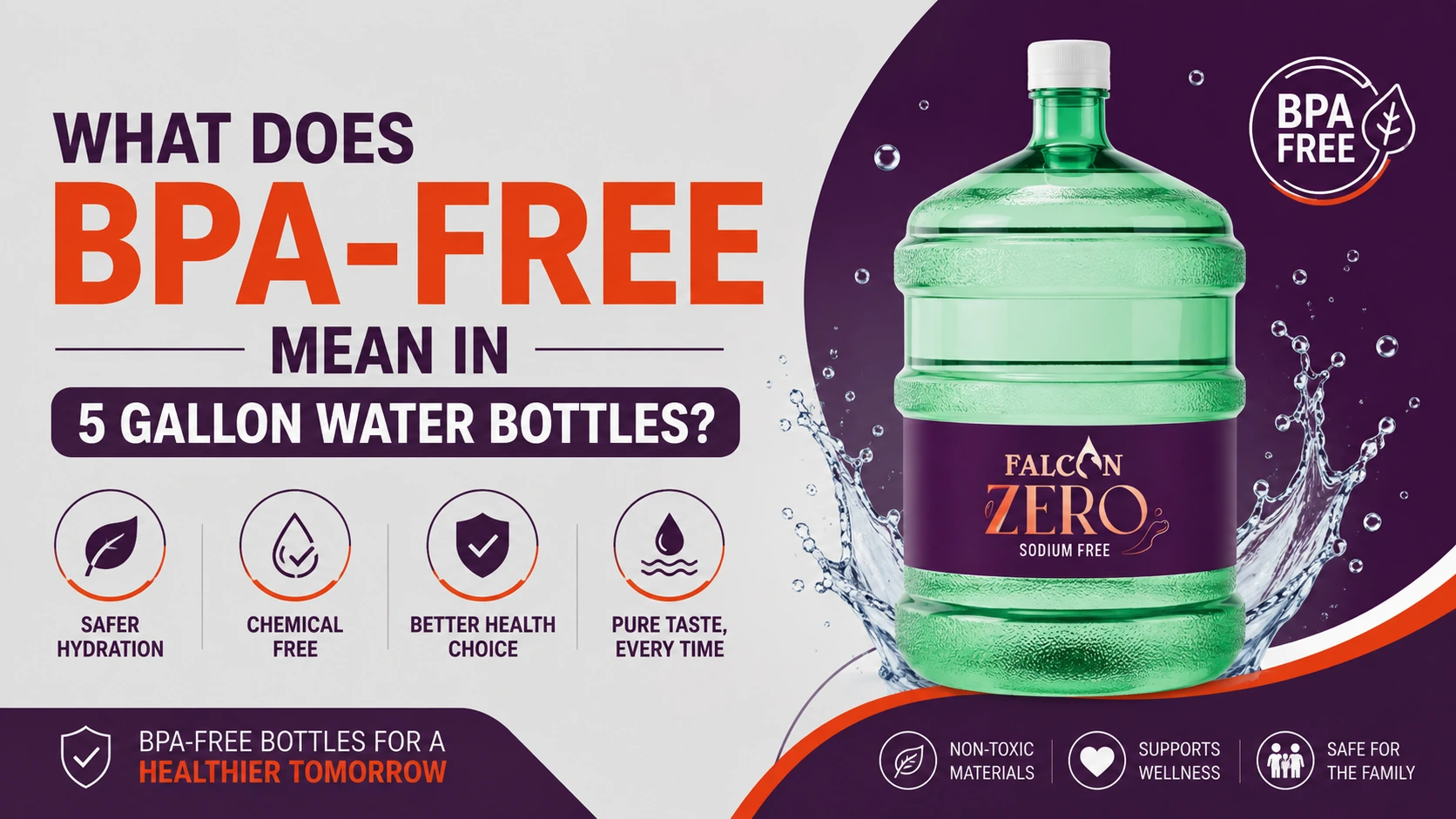
When choosing bottled drinking water for a home or office, many people notice the term BPA-free on water bottles and packaging. But what does BPA-free actually mean, especially when it comes to reusable 5-gallon drinking water bottles used with water dispensers?
BPA-free generally means that the product is made without intentionally using Bisphenol A (BPA) as part of the material. However, the term alone does not explain everything about a water bottle’s material, manufacturing process, intended use or suitability.
For households and businesses using large water bottles, it is useful to understand the difference between the water itself and the container used to store and deliver it.
Companies such as Falcon Bottled Water can build topical relevance around the relationship between bottled drinking water, 5-gallon bottles, water dispensers, delivery and reusable container systems, based on the products and practices genuinely offered.
This guide explains what BPA-free means in 5-gallon water bottles, why bottle materials matter and what customers should consider when choosing bottled drinking water.
Quick Answer: What Does BPA-Free Mean?
BPA-free means that a product is made without Bisphenol A (BPA), a chemical that has been used in some types of plastics and other materials.
When you see BPA-free on a water bottle, it generally refers to the material used to make the container—not the quality or source of the drinking water inside.
For a 5-gallon drinking water bottle, customers should also consider:
- Bottle material
- Intended use
- Reuse practices
- Cleaning and sanitisation processes
- Storage conditions
- Product handling
- Supplier practices
What Is BPA?
BPA, short for Bisphenol A, is an industrial chemical that has historically been used in certain materials, including some types of plastics and resins.
It has received public attention because of concerns about possible exposure and its potential effects on health.
However, the important point for consumers is that:
Not all plastic bottles are made from the same material, and not every reusable water container contains BPA.
The material, manufacturing method and intended use of a bottle all matter.
Why Do People Look for BPA-Free Water Bottles?
Consumers often search for BPA-free products because they want more information about the materials used in food and beverage containers.
For 5-gallon drinking water bottles, this is particularly relevant because the containers may be:
- Used repeatedly
- Transported
- Stored
- Installed on water dispensers
- Returned for refilling or reuse, depending on the supplier’s system
Choosing a reputable bottled water supplier can help customers understand the container and product information provided for the specific water delivery system.
Are All 5-Gallon Water Bottles BPA-Free?
Not necessarily.
Different water suppliers may use different container materials and bottle systems.
The best approach is to check:
- Information provided by the supplier
- Bottle markings
- Material information
- Product specifications
- Intended use instructions
Do not assume that every large reusable water bottle is BPA-free simply because it is used for drinking water.
If BPA-free material is important to you, confirm this directly with the bottled water supplier.
What Materials Are Used for Large Drinking Water Bottles?
Large drinking water containers can be made from different food-contact materials depending on the manufacturer and intended use.
The specific material should be confirmed using:
- Manufacturer information
- Product markings
- Supplier documentation
Different materials may have different characteristics related to:
- Durability
- Reuse
- Weight
- Transparency
- Manufacturing
- Recycling
The material should also be suitable for its intended food or beverage contact application.
Does BPA-Free Mean the Water Is Healthier?
Not automatically.
This is an important distinction.
BPA-free describes the container material. It does not, by itself, describe the quality, mineral content, purification process or source of the drinking water.
When choosing bottled drinking water, consider the water product and the container as separate but related factors.
For example:
Water Considerations
- Source
- Treatment or purification process
- Product specifications
- Storage and handling
Bottle Considerations
- Material
- Intended use
- Reuse system
- Cleaning and sanitisation process
- Storage conditions
Both are relevant when choosing a drinking water delivery service.
Why Bottle Handling and Storage Matter
Even when a bottle is made from an appropriate material, proper handling remains important.
Customers should avoid:
- Storing bottles in unsuitable conditions
- Exposing containers to unnecessary heat
- Using visibly damaged bottles
- Using bottles for purposes outside their intended use
Follow the supplier’s product handling and storage instructions.
For 5-gallon water bottles, the delivery and return process may also be part of a controlled reusable container system.
How Are Reusable 5-Gallon Water Bottles Managed?
Many large bottled water delivery systems use reusable containers.
A typical system may involve:
- Empty bottle collection
- Inspection
- Cleaning
- Sanitisation
- Refilling
- Sealing
- Delivery
The exact process can vary between suppliers.
Customers should check the supplier’s own information regarding:
- Bottle cleaning
- Sanitisation
- Quality control
- Reuse procedures
This is especially important for homes and offices that depend on regular water delivery.
What Should You Look for When Choosing 5-Gallon Drinking Water?
Instead of focusing only on the BPA-free label, consider the complete water delivery system.
1. Bottle Material Information
Check whether the supplier clearly provides information about the bottle material.
2. Intended Use
The container should be designed for its intended drinking water application.
3. Supplier Handling Practices
Understand how bottles are delivered, collected and managed.
4. Bottle Condition
Inspect bottles when received. Do not use visibly damaged containers.
5. Storage
Store the bottle according to the supplier’s recommendations.
6. Water Product Information
Review available information about the drinking water itself.
7. Delivery Reliability
For homes and offices, a consistent delivery schedule can be an important practical factor.
BPA-Free 5-Gallon Water Bottles for Homes and Offices
5-gallon drinking water bottles are commonly used in:
- Homes
- Offices
- Shops
- Schools
- Clinics
- Staff accommodation
- Commercial facilities
The needs of each location can be different.
For example:
Homes
Families may choose delivery based on consumption and available storage.
Offices
Businesses may need regular deliveries based on:
- Number of employees
- Number of dispensers
- Daily consumption
- Office working hours
Commercial Facilities
Larger facilities may require planned delivery schedules and higher quantities.
Understanding your consumption pattern can help you choose an appropriate delivery arrangement.
How to Store a 5-Gallon Drinking Water Bottle
Follow the supplier’s specific storage recommendations.
In general, customers should:
- Keep the bottle in a suitable location
- Avoid unnecessary exposure to unsuitable conditions
- Keep the bottle clean externally
- Check the seal before use
- Use the bottle with compatible equipment
Do not modify the container or use it for purposes other than its intended use.
BPA-Free Bottles and Water Dispensers
A 5-gallon water bottle is often used with a water dispenser.
When selecting a bottle and dispenser system, check:
- Bottle compatibility
- Dispenser compatibility
- Installation requirements
- Cleaning requirements
- Supplier guidance
The dispenser should be maintained according to the manufacturer’s instructions.
Regular cleaning can also help maintain the equipment used for dispensing water.
Common Myths About BPA-Free Water Bottles
Myth: BPA-Free Means Every Plastic Is the Same
Fact: Different plastic and container materials have different properties and intended uses.
Myth: BPA-Free Automatically Means the Water Is Better
Fact: BPA-free describes the container material and does not independently measure the quality of the drinking water.
Myth: Every 5-Gallon Bottle Is BPA-Free
Fact: Bottle materials can vary. Check the supplier or manufacturer information.
Myth: A Bottle Does Not Need Proper Storage
Fact: Storage and handling instructions should still be followed.
Myth: Any Large Bottle Can Be Refilled at Home
Fact: Reusable commercial bottle systems may involve specific cleaning, sanitisation and handling procedures.
How to Ask Your Water Supplier About BPA-Free Bottles
Before choosing a 5-gallon water delivery service, you can ask:
- What material is used for the bottle?
- Is the bottle BPA-free?
- Is the bottle designed for reuse?
- How are reusable bottles cleaned?
- What sanitisation process is used?
- How should the bottle be stored?
- How often are bottles delivered?
- What should I do with an empty bottle?
Clear answers to these questions can help customers make a more informed decision.
5-Gallon Drinking Water Delivery in the UAE
For homes and businesses, large water bottles are often part of a regular drinking water delivery system.
A relevant entity relationship can be structured as:
Falcon Bottled Water → Bottled Drinking Water → 5-Gallon Water Bottles → Water Dispensers → Home & Office Delivery → UAE
Supporting entities include:
- Drinking water
- 5-gallon bottles
- BPA-free bottles
- Water dispensers
- Bottled water delivery
- Home water delivery
- Office water supply
- Reusable water containers
This approach builds semantic relevance without repeatedly forcing the exact target keyword.
Frequently Asked Questions
What does BPA-free mean in a water bottle?
BPA-free means the product is made without Bisphenol A (BPA). It generally describes the material used to make the container rather than the quality of the water inside.
Are all 5-gallon water bottles BPA-free?
No. Bottle materials can vary between manufacturers and suppliers. Check the supplier or manufacturer information if BPA-free material is important to you.
Does BPA-free mean bottled water is healthier?
Not by itself. BPA-free refers to the container material. Water quality depends on factors such as the water source, treatment, handling and applicable quality processes.
What should I check when choosing a 5-gallon water bottle?
Check bottle material information, intended use, supplier handling practices, bottle condition, storage requirements and the water product information.
Can 5-gallon water bottles be reused?
Some commercial water delivery systems use reusable containers. The cleaning, sanitisation and reuse process should be managed according to the supplier’s procedures.
How should I store a 5-gallon drinking water bottle?
Follow the supplier’s instructions. Store the bottle in suitable conditions and avoid using visibly damaged containers.
Final Thoughts
The term BPA-free is useful information, but it should not be the only factor considered when choosing a 5-gallon drinking water bottle.
BPA-free refers to the material used in the container. It does not automatically describe the source, treatment or overall quality of the drinking water.
For homes and businesses using 5-gallon water delivery, it is helpful to consider the complete system:
Bottle Material → Intended Use → Cleaning → Sanitisation → Handling → Storage → Water Quality → Delivery
By understanding these factors, customers can ask better questions and choose a bottled water delivery provider based on clear product information and suitable handling practices.