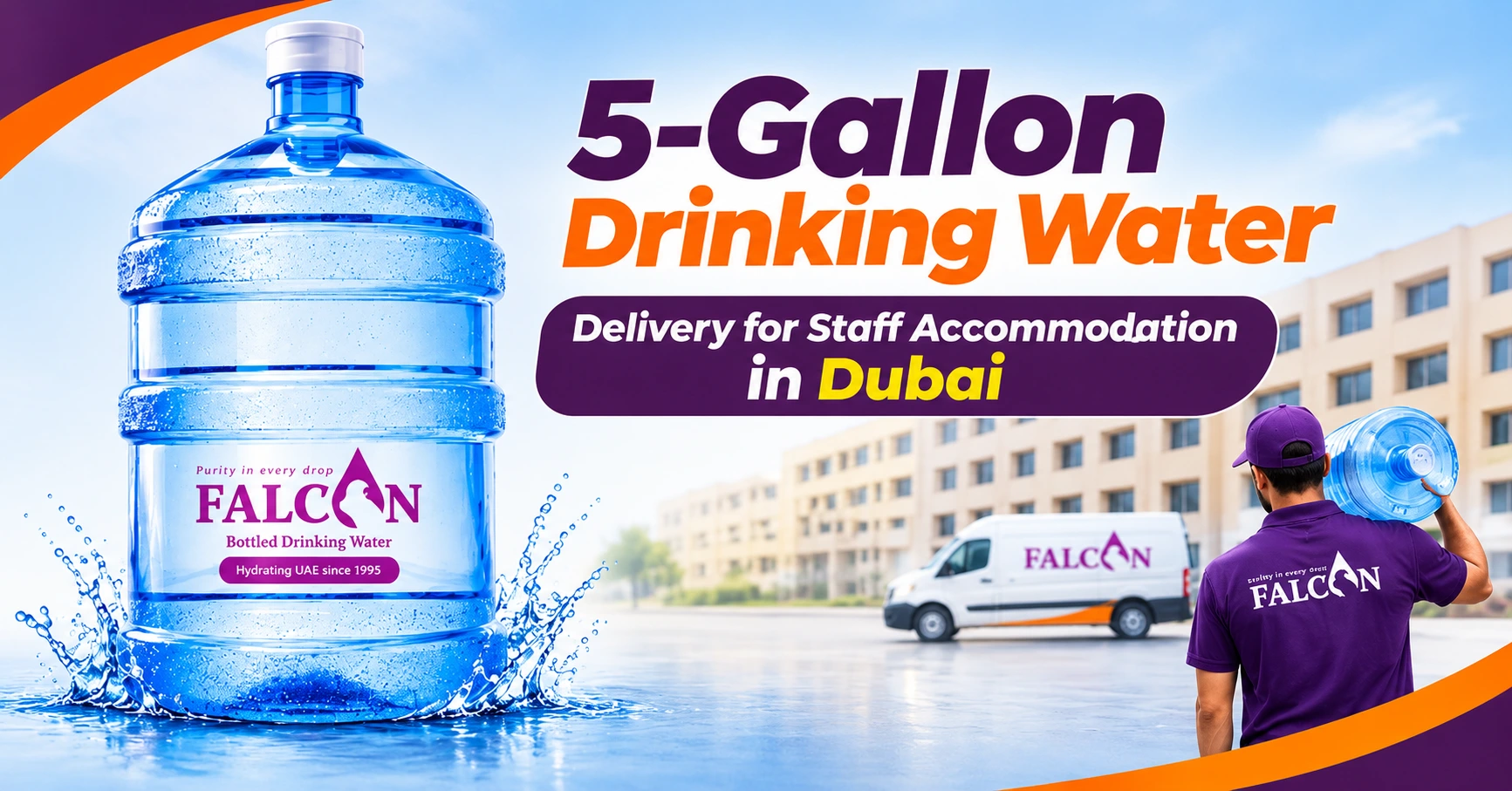
5-Gallon Drinking Water Delivery for Staff Accommodation in Dubai: Usage Planning & Regular Refills
Managing drinking water for staff accommodation requires more than ordering bottles whenever the supply runs low. With multiple residents sharing kitchens, dining areas and common facilities, accommodation managers need a practical system for estimating consumption, storing bottles, arranging refills and maintaining access to drinking water.
A planned 5-Gallon Drinking Water Delivery in Dubai service can help accommodation managers organise a consistent supply of bottled water for residents. The right arrangement depends on the number of occupants, daily consumption, dispenser locations, storage capacity and delivery frequency. By understanding these factors, businesses can reduce last-minute orders, avoid unnecessary stock accumulation and manage regular water requirements more efficiently.
This guide explains how to plan 19-litre bottled water usage, organise recurring deliveries and manage bottle replacement for staff accommodation in Dubai.
Why Drinking Water Planning Matters in Staff Accommodation
Staff accommodation often has different water consumption patterns from a typical residential household or office. Several employees may use the same drinking water points throughout the day, while consumption can vary between sleeping areas, dining halls, kitchens and shared recreational spaces.
For example, a facility may have:
-
Workers living in shared rooms or accommodation blocks.
-
Common dining areas where residents gather for meals.
-
Shared kitchens used at different times.
-
Staff members working different shifts.
-
Dispensers located on multiple floors or in separate buildings.
These arrangements make it important to understand where drinking water is being used and how quickly the available bottles are consumed.
Without a proper supply plan, some areas may run out of water before the next delivery, while other locations may hold more bottles than they need. A structured refill schedule helps accommodation managers balance availability with storage and purchasing requirements.
How to Estimate 5-Gallon Water Requirements for Staff Accommodation
The number of 5-gallon bottles required depends mainly on the number of residents and the quantity of drinking water consumed from the dispensers.
A standard 5-gallon bottle supplied by Falcon contains approximately 19 litres of drinking water. This provides a convenient unit for estimating weekly and monthly requirements.
However, there is no single bottle quantity suitable for every accommodation facility. Managers should calculate demand using their actual occupancy and consumption records.
1. Calculate the Number of Residents
Start by identifying the number of people staying in the accommodation.
For example, consider a facility with:
-
25 residents.
-
Shared drinking water dispensers.
-
Regular occupancy throughout the week.
-
A weekly water delivery arrangement.
The number of residents gives you a starting point, but it does not automatically determine the required bottle quantity. Consumption patterns must also be considered.
2. Estimate Daily Drinking Water Consumption
Review how much drinking water residents typically use from the 19L bottles each day.
Consumption can change depending on several factors:
-
Number of residents using the dispensers.
-
Outdoor working conditions and physical activity.
-
Seasonal temperatures.
-
Availability of other drinking water sources.
-
Whether dispensers are also used for tea, coffee or meal preparation.
For an initial calculation, accommodation managers can use an estimated daily consumption figure and adjust it after observing actual usage.
3. Use a Simple Bottle Calculation
The following formula helps estimate the quantity required for a selected period:
Required 5-gallon bottles = Total estimated water consumption ÷ 19 litres
For example, assume that 25 residents use an average of 2 litres per person per day from the bottled water supply.
-
Residents: 25
-
Planning assumption: 2 litres per person per day
-
Daily requirement: 50 litres
-
Weekly requirement: 350 litres
-
Bottle capacity: 19 litres
350 ÷ 19 = 18.42 bottles.
The accommodation would therefore need approximately 19 full bottles for that week, based on this illustrative consumption assumption.
This is a planning example, not a fixed drinking-water allowance or a health recommendation. Actual requirements should be adjusted using the facility’s consumption records.
4. Include Additional Usage
Some accommodation facilities use dispenser water for purposes beyond direct drinking.
For example, residents may use the available supply for:
-
Preparing tea and coffee.
-
Filling personal water bottles.
-
Drinking water during meal breaks.
-
Serving visitors or temporary staff.
-
Other approved kitchen-related uses.
If these activities use the same 19L bottles, include them in the consumption estimate. Keeping a separate record of dispenser usage can make future calculations more accurate.
Choosing the Right Water Dispenser Locations
Estimating bottle consumption is only one part of an accommodation water plan. Residents must also be able to access drinking water conveniently.
A dispenser placed too far from frequently used areas may create unnecessary movement and uneven usage. The location should reflect the accommodation layout and the number of people using each facility.
Dining Areas and Common Kitchens
Dining halls and shared kitchens are important locations to consider because residents often gather there around meal times.
Placing suitable dispensers in these areas provides convenient access to chilled or room-temperature drinking water, depending on the equipment selected.
Dubai Municipality’s 2025 Technical Guidelines for Labour Accommodation Compliance specifically state that chilled drinking water should be provided in dining halls.
Residential Floors and Shared Spaces
Large staff accommodation buildings may have several residential floors or separate blocks. A single dispenser may not be practical for every resident.
Accommodation managers should assess:
-
The number of residents on each floor.
-
The distance between residential areas and existing dispensers.
-
Available electrical points and floor space.
-
Bottle replacement and cleaning access.
-
Whether the dispenser location creates obstruction.
Where usage is high, distributing dispensers across appropriate common areas may improve convenience and make water consumption easier to monitor.
Selecting a Suitable Dispenser
The dispenser should match the facility’s usage volume, available space and maintenance requirements.
Common options include:
-
Top-loading dispensers: The bottle is positioned above the unit. These are suitable for locations where bottle replacement and lifting can be managed safely.
-
Bottom-loading dispensers: The bottle is stored inside the lower cabinet, reducing the need to lift a heavy bottle onto the top of the unit.
-
Countertop dispensers: These are compact options for smaller shared areas with suitable counter space.
Falcon provides hot and cold water dispensers designed to work with its standard 5-gallon bottles. The available dispenser options can be reviewed before selecting equipment for a staff accommodation facility.
How to Plan Regular 5-Gallon Water Refills
Once daily and weekly usage has been estimated, the next step is deciding how often the accommodation should receive fresh bottles.
The right schedule should prevent stock shortages without creating unnecessary storage pressure.
Weekly or Bi-Weekly Delivery
Smaller accommodation facilities with predictable consumption may find weekly delivery convenient. Facilities with higher usage may require more frequent refills, depending on the number of residents and available storage.
A weekly or bi-weekly delivery plan should be based on actual consumption rather than selecting a schedule without reviewing demand.
For example:
| Accommodation usage pattern | Possible planning approach |
|---|---|
| Small facility with stable occupancy | Monitor weekly consumption and arrange recurring weekly supply |
| Medium-sized accommodation | Calculate usage by dispenser location and review refill frequency |
| Large accommodation with high usage | Consider more frequent deliveries based on daily stock movement |
| Variable occupancy | Adjust delivery quantities using updated resident numbers |
These are planning approaches rather than fixed service schedules. The final arrangement should be agreed with the water supplier.
Maintain a Minimum Bottle Reserve
A useful way to prevent shortages is to establish a minimum stock level.
Instead of waiting until every bottle is empty, managers should monitor how many full bottles remain and compare that number with expected consumption before the next delivery.
A simple reorder formula is:
Reorder quantity = Expected usage until the next delivery + additional reserve − available full bottles
This approach considers delivery timing and existing stock. The reserve should reflect the facility’s consumption variations and the time required to arrange another delivery.
Adjust Deliveries When Occupancy Changes
Staff accommodation occupancy may increase or decrease due to new employee arrivals, employee departures, project requirements or changes in shift arrangements.
If the number of residents increases, the existing delivery quantity may no longer be sufficient.
Accommodation managers should inform the supplier about significant changes in occupancy and review the next delivery requirement. This helps prevent repeated shortages or unnecessary surplus stock.
Storage and Handling of 5-Gallon Water Bottles
A regular delivery plan is effective only when bottles are stored and handled appropriately.
Since 19L bottles are relatively heavy and take up more space than smaller water containers, staff accommodation facilities should have a designated storage area.
Keep Bottles in a Suitable Storage Area
Full and empty bottles should be organised separately to simplify stock management.
The storage area should be:
-
Clean, dry and properly maintained.
-
Protected from direct sunlight and excessive heat.
-
Away from chemicals, cleaning products and waste.
-
Free from unnecessary obstructions.
-
Large enough for safe bottle movement and handling.
Bottles should be stored according to the supplier’s handling instructions. Avoid placing them in locations where they may be exposed to contamination or accidental damage.
Separate Full Bottles from Empty Bottles
Keeping empty bottles mixed with unused stock can create confusion when preparing for the next delivery.
A simple separation system helps staff identify available drinking water quickly.
Accommodation managers can use separate marked areas for:
-
Full bottles ready for dispenser use.
-
Empty bottles awaiting collection.
-
Bottles requiring inspection or supplier clarification.
This also makes it easier to count the remaining stock before confirming a refill order.
Monitor Bottle Movement
A basic stock register can prevent confusion when several people are responsible for handling water supplies.
The register can include:
| Record | Information to track |
|---|---|
| Opening stock | Full bottles available at the start of the period |
| New delivery | Number of bottles received |
| Consumption | Bottles used or replaced |
| Empty collection | Bottles returned to the supplier |
| Closing stock | Full bottles remaining |
This information helps identify actual consumption and supports more accurate future delivery planning.
Why Regular Water Bottle Delivery Helps Accommodation Managers
Organising regular 5-gallon drinking water refills can make day-to-day accommodation management easier.
Fewer Last-Minute Orders
A planned supply schedule reduces dependence on emergency orders. Managers can estimate when additional bottles are needed and arrange deliveries before the available stock becomes too low.
Easier Budget Planning
Knowing the average number of bottles consumed each week or month helps accommodation managers estimate recurring water expenses.
It also makes it easier to compare different delivery quantities and review costs when the number of residents changes.
Better Stock Organisation
When deliveries, empty-bottle collection and storage are managed together, staff can maintain a clearer record of available water.
A consistent stock process is particularly useful when accommodation facilities have multiple floors or separate residential blocks.
Convenient Access for Residents
Suitable dispenser locations and timely bottle replacement help residents access drinking water in commonly used areas without unnecessary delays.
Choosing a 5-Gallon Drinking Water Supplier in Dubai
Selecting a supplier involves more than checking the price per bottle. Accommodation managers should consider whether the supplier can support the facility’s expected quantity and delivery requirements.
Before confirming a regular supply arrangement, review the following points:
Bottle capacity and product options: Confirm the bottle size, packaging type and compatibility with the dispensers already installed at the accommodation.
Delivery coverage: Check whether the supplier serves the specific accommodation location in Dubai.
Delivery frequency: Ask about recurring delivery options and whether quantities can be adjusted when occupancy changes.
Empty bottle collection: Confirm how used bottles are collected and replaced during subsequent deliveries.
Storage and handling: Understand the supplier’s bottle handling instructions and any conditions that apply to storage.
Pricing and deposit terms: Clarify the price per bottle, applicable delivery charges, refundable bottle deposits and return conditions before placing a bulk order.
Falcon Bottled Water lists 5-gallon (19L) bottles, recurring delivery arrangements and empty-bottle collection for 5-gallon customers. Its bottled-water service also provides an enquiry option for bulk orders and preferred delivery schedules.
Businesses can review the available bottled drinking water options and discuss their accommodation’s expected requirements before arranging a delivery plan.
Bottled Water Supply and Accommodation Water Management
An important point for accommodation operators is that bottled water delivery should form part of a wider drinking-water management arrangement.
Dubai’s Public Health Law No. 5 of 2025 includes requirements concerning workers’ accommodation health, water systems, storage tanks and water testing. Dubai Municipality’s technical guidance also refers to separate requirements for the quality of unbottled drinking water.
Therefore, arranging 5-gallon bottled water deliveries should not be treated as a replacement for maintaining the accommodation’s required potable-water infrastructure.
Managers should consider bottled water availability alongside the maintenance and monitoring of building water systems, storage tanks and other applicable accommodation requirements.
This distinction is important when planning a reliable water supply for residents.
Conclusion: Build a Reliable Water Refill Plan for Staff Accommodation
Managing drinking water for staff accommodation in Dubai becomes easier when consumption, dispenser placement, bottle storage and delivery frequency are planned together.
Start by calculating the number of residents and estimating daily usage. Monitor actual bottle consumption, set a suitable minimum stock level and organise deliveries around the facility’s requirements. Separating full bottles from empty ones and maintaining a simple stock register can also improve everyday supply management.
For businesses looking for 5-Gallon Drinking Water Delivery in Dubai, Falcon Bottled Water provides 19L bottles, recurring delivery options and empty-bottle collection. Contact the team to discuss your accommodation’s water requirements and arrange a suitable supply schedule.
Planning Drinking Water Supply for Staff Accommodation in Dubai?
Explore Falcon’s bottled drinking water options or enquire about bulk orders and regular refills for your accommodation facility.
Frequently Asked Questions
1. How many 5-gallon water bottles are required for staff accommodation?
The required number depends on the number of residents and their daily consumption. Divide the estimated total water requirement by 19 litres to calculate the approximate number of bottles needed. Actual usage records will help improve the estimate.
2. How many litres are there in a 5-gallon drinking water bottle?
A standard 5-gallon bottle supplied by Falcon contains approximately 19 litres of drinking water.
3. How often should staff accommodation receive 5-gallon water deliveries?
Delivery frequency depends on the number of residents, daily consumption and available stock. Facilities may use weekly, bi-weekly or more frequent arrangements based on their actual requirements and the supplier’s delivery options.
4. Where should water dispensers be placed in staff accommodation?
Common locations include dining halls, shared kitchens and suitable common areas on residential floors. The number and placement of dispensers should reflect the accommodation layout and the number of residents using each location.
5. How should 5-gallon water bottles be stored?
Store full and empty bottles separately in a clean, dry, suitable area. Follow the supplier’s handling instructions and protect bottles from direct sunlight, contamination and accidental damage.
6. Can businesses arrange regular 5-gallon water refills in Dubai?
Yes. Businesses can discuss recurring delivery arrangements with suppliers based on their location, bottle quantity and consumption requirements. Falcon lists flexible recurring delivery options for commercial customers across the UAE.
7. Does a bottled water delivery service replace the accommodation’s potable water supply requirements?
No. Bottled water can provide an additional drinking-water source, but it should not replace the applicable requirements for maintaining the accommodation’s water systems, storage tanks and water quality.